
Child and Protection and Safeguarding Policy
Child and Protection and Safeguarding Policy for
London Stadium Learning
Issued March 2025 – Review Date August 2025
Designated Safeguarding Lead – Anna Chapman
Deputy Safeguarding Lead –Pia Tanneraho
Approved by – Ashley Milum – Interim Head of School Improvement – Children and Young People
This policy is available on London Stadium Learning’s website and also on request by contacting anna.chapman@newham.gov.uk. We inform all visitors and their guardians if under 18 about this policy when they attend activities in the education centre.
Contents
- Introduction
- Statutory Framework
- London Stadium Learning Roles and responsibilities
- Types of abuse and specific safeguarding Issues
- London Stadium Learning Procedures
- Training
- Professional Confidentiality
- Record keeping and Information Sharing
- Interagency Working
- Allegations about members of the children’s workforce
- Whistleblowing
Appendix 1 – Recording Format
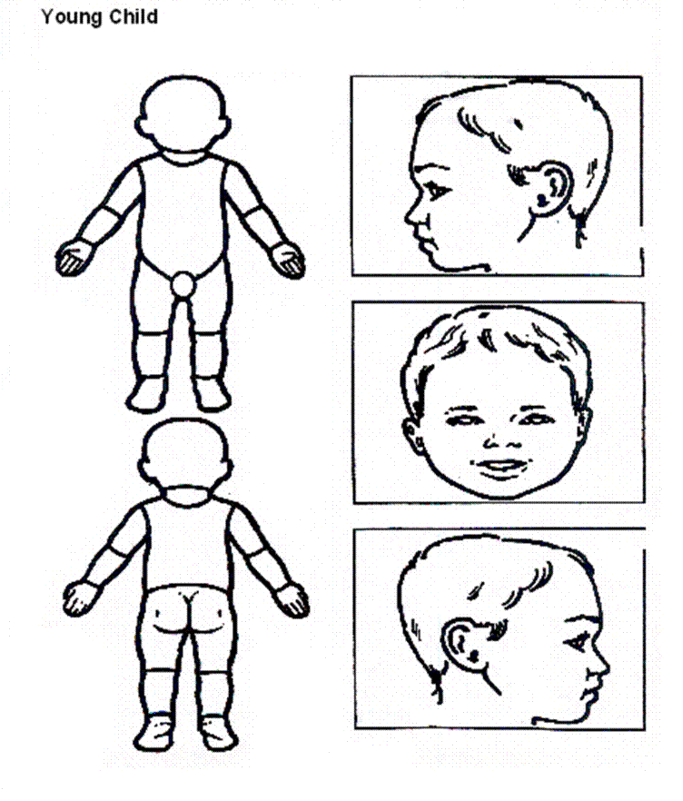
Appendix 2 – Body Plans
Appendix 3 – List of London Stadium Learning’s Policies
Appendix 4 – Flowcharts for escalating concerns
CHILD PROTECTION AND SAFEGUARDING POLICY FOR LONDON STADIUM LEARNING
- Introduction
London Stadium Learning is committed to develop and sustain a strong safeguarding culture which supports us all to safeguard children and creates a positive and respectful learning environment in which everyone can flourish.
Safeguarding and promoting the welfare of children is everyone’s responsibility. ‘Children’ includes everyone under the age of 18. Everyone who comes into contact with children and their families has a role to play. In order to fulfil this responsibility effectively, all practitioners should make sure their approach is child centred. This means that they should consider, at all times, what is in the best interests of the child.
Education Providers, School and college staff are particularly important, as they are in a position to identify concerns early, provide help for children, promote children’s welfare and prevent concerns from escalating.
Keeping children safe in education is statutory guidance that schools and colleges in England must have regard to when carrying out their duties to safeguard and promote the welfare of children.
It is essential that everybody working in a school or college understands their safeguarding responsibilities. Governing bodies and proprietors should ensure that those staff who work directly with children read at least Part one of the guidance.
Governing bodies and proprietors, working with their senior leadership teams and especially their designated safeguarding lead, should ensure that those staff who do not work directly with children read either Part one or Annex A (a condensed version of Part one) of the full version of the document. This is entirely a matter for the school or college and will be based on their assessment of which guidance will be most effective for their staff to safeguard and promote the welfare of children.
The full version of KCSIE can be found here: Keeping children safe in education – GOV.UK (www.gov.uk)
(Keeping Children Safe in Education – DfE, September 2024)
This Child Protection and Safeguarding Policy is for all London Stadium Learning staff and volunteers, its student, visitors and their centre staff, parents, governors, volunteers and the wider community. Note: work experience students will be classed as children attending provision and not as safe adults. It forms part of the safeguarding arrangements for our centre and should be read along with the council and centre’s Safer Recruitment, Staff Code of Conduct, Physical Intervention, Anti-Bullying, Equality, Behaviour, Attendance, Health and Safety, Educational Visits, Online /Mobile Phone / Social, Media / Photography Policy, Whistleblowing/Complaints policies.
This policy should be read in conjunction with Keeping Children Safe in Education, (DfE 2024)
Keeping children safe in education (HMG 2024)
…and with reference to the Education Inspection Framework, Ofsted 2023. Education inspection framework for September 2023 (HMG 2023)
All staff must read and be signed off on:
- Part One of Keeping Children Safe in Education 2024, together with Annex B of KCSiE 24
- DFE statutory guidance Working together to safeguard children 2023 (HMG 2023)
- ‘What to do if you’re worried a child is being abused: Advice for practitioners’ (DfE March 2015).
Sensitivity to language:KCSiE uses ‘victim’ and ‘perpetrator/alleged perpetrator’ throughout, with a warning that such terms may not be helpful to use in front of or directly in addressing, children. London Stadium Learning will follow the guidance to
- Use children’s names when speaking to them and referring to them.
- Use ‘reporting child’ instead of ‘victim’, because a child may not see themselves as a victim.
- use, ‘reported child’ when investigating incidents, rather than use labels like ‘bully’ or ‘perpetrator’. These words and other terms are thoroughly investigated for their meaning and impact as part of the safeguarding practice in our centre.
A DfE statutory change for 2024 is that the definition for Safeguarding has been amended to reflect Working Together to Safeguard Children 2023
Another change refers to children who are ‘deliberately missing education’ amended to reflect revised definition of ‘unexplainable and or/persistent absences from education’
Our Centre is committed to safeguarding children and to creating a culture of vigilance at the Centre. This policy should also be read in conjunction with Keeping Children Safe in Education (DfE, 2024).
Safeguarding and promoting the welfare of children is defined in Keeping Children Safe in Education 2024 as:
- Providing help and support to meet the needs of children as soon as problems emerge
- protecting children from maltreatment, whether that is within or outside the home, including online preventing the impairment of children’s mental and physical health or development
- ensuring that children grow up in circumstances consistent with the provision of safe and effective care
- taking action to enable all children to have the best outcomes
Children includes everyone under the age of 18
2. Statutory framework
2.1 The Education Act 2002 Section 175, places a statutory responsibility on governing bodies to have policies and procedures in place that safeguard and promote the welfare of children who are pupils of their school.
2.1 The development of appropriate procedures and the monitoring of good practice in the London Borough of Newham are the responsibilities of the Newham Safeguarding Children Partnership (NSCP). In Newham all professionals must work in accordance with the London Child Protection Procedures.
2.3 London Stadium Learning also works in accordance with the following legislation and guidance:
✔Keeping Children Safe in Education (DfE September 2024) :
Keeping children safe in education – GOV.UK (www.gov.uk)
✔Working Together to Safeguard Children (HMG, 2023) :
Working together to safeguard children – GOV.UK (www.gov.uk)
✔Education Act 2011 :
Education Act 2011 (legislation.gov.uk)
✔Counter-Terrorism and Security Act (HMG, 2015) :
Counter-Terrorism and Security Act 2015 (legislation.gov.uk)
✔The Prevent duty Departmental advice for schools and childcare providers (DfE 2022) :
The Prevent duty: safeguarding learners vulnerable to radicalisation – GOV.UK (www.gov.uk)
✔Prevent Duty Guidance for Further Education Establishments in England and Wales (HMG 2015-updated May 2024) :
✔Serious Crime Act 2015 (Home Office, 2015):
Serious Crime Act 2015 (legislation.gov.uk)
✔Sexual Offences Act (2003):
Sexual Offences Act 2003 (legislation.gov.uk)
✔Education (Pupil Registration) Regulations 2006 :
The Education (Pupil Registration) (England) Regulations 2006 (legislation.gov.uk)
✔General Data Protection Regulations 2018 (GDPR)
Data Protection Act 2018 (legislation.gov.uk)
✔What to do if you’re worried a child is being abused (HMG, 2015) :
Stat guidance template (publishing.service.gov.uk)
✔Searching, screening and confiscation (DfE, 2018) :
Searching, screening and confiscation in schools – GOV.UK (www.gov.uk)
✔Children Act 1989 :
Children Act 1989 (legislation.gov.uk)
✔Children Act 2004 :
Children Act 2004 (legislation.gov.uk)
✔Children and Social Work Act 2017 :
Children and Social Work Act 2017 (legislation.gov.uk)
✔Modern Slavery Act 2015 :
Modern Slavery Act 2015 (legislation.gov.uk)
✔The Homelessness Reduction Act 2017 :
Homelessness Reduction Act 2017 (legislation.gov.uk)
✔Domestic Abuse Act 2021
✔Preventing and Tackling Bullying 2017 :
Preventing and tackling bullying (publishing.service.gov.uk)
✔Female Genital Mutilation Act 2003 (S. 74 – Serious Crime Act 2015) :
Female Genital Mutilation Act 2003 (legislation.gov.uk)
✔Information Sharing Advice for practitioners providing safeguarding services to children, young people, parents and carers. (DfE July 2018) :
Information sharing: advice for practitioners (publishing.service.gov.uk)
✔Advice on Whistleblowing in Maintained Schools (DfE 2014) :
Whistleblowing procedure for maintained schools – GOV.UK (www.gov.uk)
✔Voyeurism (Offences) Act 2019 :
Voyeurism (Offences) Act 2019 (legislation.gov.uk)
✔London Child Protection Procedures 25/9/2024
London Safeguarding Children Procedures
✔Contextual Safeguarding
Contextual Safeguarding Research Durham University
✔Use of reasonable force DFE July 2013
(✔=checked as up to date 25/11/24)
3. London Stadium Learning roles and responsibilities
All adults working with or on behalf of children have a responsibility to protect them and to provide a safe environment that enables them to learn and achieve their full potential. The names of those in our Centre with these specific responsibilities are shown on page 1 of this policy.
3.1 The Local Authority (LA)
Note: work experience students will be classed as children attending provision and not as safe adults and so are not considered as staff in the references to them below.
The LA ensures that a strong Safeguarding culture is embedded within London Stadium Learning’s provision, that our commitment to keep our children safe is explicit and understood by all in the centre’s community and that our practice reflects the its vision and values.
The LA ensures that all required policies relating to child protection and safeguarding (including Covid-19) are in place and that the child protection policy reflects statutory and local guidance. They ensure that these are reviewed every 6 months?
The LAensures that the policies, procedures, practice and professional development and training in the provision are effective and comply with the statutory requirements at all times. The LA will ensure relevant staff have due regard to the relevant data protection principles, which allow them to share (and withhold) personal information as provided for in the Data Protection Act 2018 and the GDPR.
The LA ensures that there is a named Designated Safeguarding Lead and Deputy Safeguarding Lead(s) in place, that they have their safeguarding role explicitly within their job descriptions and are appropriately trained for their role, as set out in Keeping Children Safe in Education 2023. The lead for safeguarding for the LA visits the provision regularly and invites the DSL to attend meetings with other DSL in the LA – Children and Young People’s Services.
The LA checks that safeguarding is included in Behaviour, Online and all related policies including the staff Code of Conduct and is highlighted in all policies as the overarching responsibility of all staff at all times, for children attending the centre with a school, undertaking work experience and during the holidays.
The LAensures that the centre contributes fully to inter-agency working in line with statutory and local guidance and uses the appropriate referral pathways. It ensures that information is stored and shared appropriately and in accordance with the statutory requirements as set out in the Data Protection Act 2018 and in line with GDPR requirements.
The LA ensures that all staff members and volunteers undergo appropriate safeguarding and child protection training that is regularly updated, at least annually, to provide them with the relevant skills and up to date knowledge to keep all our children safe.
The LA ensures that children are taught to keep themselves safe, including on-line, making sure that appropriate filters and monitoring systems are in place in the centre. This includes all staff being trained at induction in an understanding of the expectations, applicable roles and responsibilities in relation to filtering and monitoring. This responsibility extends to children who are accessing on-line learning from our centre or at home. Our children will also be taught how to keep themselves safe through teaching and learning opportunities in RSHE and through whole-centre practice led by staff as part of the provision of a rich and balanced curriculum.
The LAare responsible for maintaining robust safer recruitment procedures that help to deter, reject or identify people who may abuse children. It adheres to statutory responsibilities to check adults working with children and has recruitment and selection procedures in place (see the centre’s ‘Safer Recruitment’ policy for further information). It also ensures that volunteers are appropriately supervised in the centre.
Through Council systems we will conduct background checks through an online search as part of due diligence when shortlisting candidates; undertake a risk assessment and use our professional judgement when deciding whether to obtain an enhanced DBS certificate for any volunteer undertaking unregulated activity.
3.2 The Designated Safeguarding Lead (and Deputy)
The Designated Safeguarding Lead (DSL) at London Stadium Learning takes the lead responsibility for managing child protection issues, safeguarding training and raising awareness of all child protection policies and procedures at the Centre and that everyone at London Stadium Learning, including temporary staff, volunteers and contractors are aware of these procedures and that they are followed at all times. Note: work experience students will be classed as children attending provision and not as safe adults in this case. They are a source of advice and support to other staff on child protection matters and make sure that timely referrals to Newham Multi-Agency Safeguarding Hub (MASH) are made in accordance with current London Child Protection Procedures. The Designated Safeguarding Lead (DSL) works with the local authority and other agencies as required. If for any reason the Designated Safeguarding Lead is unavailable, the Deputy Designated Safeguarding Lead will act in their absence.
The DSL has responsibility online safety which, amongst other things, includes an understanding of the expectations, applicable roles and responsibilities in relation to filtering and monitoring – see para 141 of the DFE Guidance for further information.
The Designated Safeguarding Lead (DSL) is a source of advice and support to other staff on all child protection matters and makes sure that timely referrals to Newham Multi-Agency Safeguarding Hub (MASH) are made in accordance with current London Child Protection Procedures. The Designated Safeguarding Lead (DSL) works with the local authority, the Channel programme and other agencies as required. If for any reason the Designated Safeguarding Lead (DSL) is unavailable, the Deputy Designated Safeguarding Lead will act in their absence.
The Designated Safeguarding Lead (DSL) will also be alert to the additional vulnerabilities of children with a social worker, ensuring that staff know who those children are, understand their academic progress and attainment and maintain a culture of high aspirations for these children. The Designated Safeguarding Lead (DSL) will also support staff to identify the challenges that children in this group may face and any additional support and/or adjustments that can make to best support them.
In addition, in most cases homelessness would be considered in the context of children living with their families, however the Designated Safeguarding Lead (DSL) will be alert that some children may be homeless independently and this will require a different level of intervention and support.
3.3 The Head of Service
The Head of Centre works in accordance with the requirements upon all Centre staff. In addition, the Head of Service ensures that all safeguarding policies and procedures adopted by the Management Group are followed by all staff. The Head of Service will ensure that opportunities for children to learn about safeguarding are included in the range of activities that young people take part in when visiting London Stadium Learning. This includes work experience students. (Note: work experience students will be classed as children attending provision and not as safe adults)
3.1c In-line with and supporting centre policy we will ensure that children are aware about how to keep themselves and others safe, including online. including e.g. the emotional impact of on-line nude image sharing, sexist abuse, body shaming or the sexual targeting of children with SEN or protected characteristics.
3.1d In-line with the national curriculum we support preventative education that prepares pupils and students for life in modern Britain and creates a culture of zero tolerance for sexism, misogyny/misandry, homophobia, bi-phobic and sexual violence/harassment.
3.1e London Stadium Learning has a clear set of values and standards underpinned by our behaviour policy and content developed for our activities.
3.1f Our programmes are inclusive and developed to be age and stage of development appropriate (especially for our children with SEND).
3.4 London Stadium Learning staff – safeguarding children’s futures
Everyone at London Stadium Learning has a responsibility to provide a learning environment in which visiting children can feel safe to learn and to ensure that every child has access to learning, even if circumstances preclude their physical presence in the centre.
All staff members are prepared to identify children who may benefit from early help and understand their role and responsibilities within this process. This includes identifying any emerging problems so appropriate support may be provided and in liaison with the Designated Safeguarding Lead (DSL) report any concerns. All staff members are aware of and follow Centre processes as set out in this policy and are aware of how to make a referral to the Newham MASH when there is a need to do so.
All staff should be aware that children may not feel ready or know how to tell someone that they are being abused, exploited, or neglected, and/or they may not recognise their experiences as harmful. For example, children may feel embarrassed, humiliated, or are being threatened. This could be due to their vulnerability, disability and/or sexual orientation or language barriers. This should not prevent staff from having a professional curiosity and speaking to the designated safeguarding lead (DSL) if they have concerns abouta child. It is also important that staff determine how best to build trusted relationships with children and young people which facilitate communication.
All staff should be able to reassure targeted children that they are being taken seriously and that they will be supported and kept safe. A child should never be given the impression that they are creating a problem by reporting abuse, sexual violence or sexual harassment. Nor should a child ever be made to feel ashamed for making a report.
We recognise that high self-esteem, confidence, supportive friends and good lines of communication with a trusted adult help to protect children. Our Safeguarding culture in the centre depends upon every member of staff being proactive in recognising opportunities to promote and support the development of these protective factors.
This includes the use of appropriate forms of online communication directly from staff to children. We use the functions through the platform for online learning – Google classroom/London Stadium Learning.
All staff engage with and support children in promoting responsible use of social media, safety around the centre and responsibility for their own and others’ wellbeing, as an integral element of a strong centre safeguarding culture.
3.5 Educational Partners and speakers on site
All visitors will be required to have an enhanced (children’s) DBS. Evidence of this must be lodged with one of the centre’s DSLs BEFORE a contractor may work when children are on site. This is not a requirement when there are no children on site. Ideally contractors will wear their own photo-ID card with their DBS number included. If not they must wear a London Stadium Learning visitor’s badge.
4. Types of abuse / specific safeguarding issues
All staff should be aware of the indicators of abuse, neglect and exploitation (see below), understanding that children can be at risk of harm inside and outside of the centre, inside and outside of home, and online. Exercising professional curiosity and knowing what to look for is vital for the early identification of abuse and neglect so that staff are able to identify cases of children who may be in need of help or protection.
All staff should be aware that abuse, neglect, exploitation, and safeguarding issues are rarely standalone events and cannot be covered by one definition or one label alone. In most cases, multiple issues will overlap. Keeping Children Safe in Education (DfE, 2024)
The five main types of abuse referred to in Keeping Children Safe in Education are:
- Abuse
- Physical abuse
- Emotional abuse
- Sexual abuse
- Neglect
Indicators of abuse and neglect
- Abuse: a form of maltreatment of a child. Somebody may abuse or neglect a child by inflicting harm or by failing to act to prevent harm. Harm can include ill treatment that is not physical as well as the impact of witnessing ill treatment of others. This can be particularly relevant, for example, in relation to the impact on children of all forms of domestic abuse. Children may be abused in a family or in an institutional or community setting by those known to them or, more rarely, by others. Abuse can take place wholly online, or technology may be used to facilitate offline abuse. Children may be abused by an adult or adults or by another child or children.
- Physical abuse: a form of abuse which may involve hitting, shaking, throwing, poisoning, burning or scalding, drowning, suffocating or otherwise causing physical harm to a child. Physical harm may also be caused when a parent or carer fabricates the symptoms of, or deliberately induces, illness in a child.
- Emotional abuse: the persistent emotional maltreatment of a child such as to cause severe and adverse effects on the child’s emotional development. It may involve conveying to a child that they are worthless or unloved, inadequate, or valued only insofar as they meet the needs of another person. It may include not giving the child opportunities to express their views, deliberately silencing them or ‘making fun’ of what 9 they say or how they communicate. It may feature age or developmentally inappropriate expectations being imposed on children. These may include interactions that are beyond a child’s developmental capability as well as overprotection and limitation of exploration and learning or preventing the child from participating in normal social interaction. It may involve seeing or hearing the ill-treatment of another. It may involve serious bullying (including cyberbullying), causing children frequently to feel frightened or in danger, or the exploitation or corruption of children. Some level of emotional abuse is involved in all types of maltreatment of a child, although it may occur alone.
- Sexual abuse: involves forcing or enticing a child or young person to take part in sexual activities, not necessarily involving violence, whether or not the child is aware of what is happening. The activities may involve physical contact, including assault by penetration (for example rape or oral sex) or non-penetrative acts such as masturbation, kissing, rubbing, and touching outside of clothing. They may also include non-contact activities, such as involving children in looking at, or in the production of, sexual images, watching sexual activities, encouraging children to behave in sexually inappropriate ways, or grooming a child in preparation for abuse. Sexual abuse can take place online, and technology can be used to facilitate offline abuse. Sexual abuse is not solely perpetrated by adult males. Women can also commit acts of sexual abuse, as can other children. The sexual abuse of children by other children is a specific safeguarding issue in education and all staff should be aware of it and of the centre’s policy and procedures for dealing with it.
- Neglect: the persistent failure to meet a child’s basic physical and/or psychological needs, likely to result in the serious impairment of the child’s health or development. Neglect may occur during pregnancy, for example, as a result of maternal substance abuse. Once a child is born, neglect may involve a parent or carer failing to: provide adequate food, clothing and shelter (including exclusion from home or abandonment); protect a child from physical and emotional harm or danger; ensure adequate supervision (including the use of inadequate care-givers); or ensure access to appropriate medical care or treatment. It may also include neglect of, or unresponsiveness to, a child’s basic emotional needs.
London Stadium Learning’s staff are aware of the signs of abuse and neglect so we are able to identify children who may be in need of help or protection.
Any concerns identified by London Stadium Learning staff, or reported to London Stadium Learning staff, will be notified to the London Stadium Learning DSL and teacher in charge of the visiting group. If the concern relates to the teacher in charge, the concern must be communicated immediately to the centre by the London Stadium Learning DSL and the centre will designate an appropriate colleague to respond to the situation on-site. Procedures to ensure the safety and well-being of the child/children must be followed.
4.1 Child-on-child abuse
The centre may be the only stable, secure and safe place in the lives of children at risk of, or who have suffered harm. When these children visit London Stadium Learning they may, on occasions, display challenging behaviour or they may instead be withdrawn, or display abusive behaviours towards other children.
Child on child abuse can manifest itself in many ways. This may include bullying (including cyber bullying), on-line abuse, gender-based abuse, ‘sexting’ or sexually harmful behaviour.
Child-on-child abuse is most likely to include, but may not be limited to:
- bullying (including cyberbullying, prejudice-based and discriminatory bullying)
- abuse in intimate personal relationships between children (sometimes known as ‘teenage relationship abuse’)
- physical abuse such as hitting, kicking, shaking, biting, hair pulling, or otherwise causing physical harm (this may include an online element which facilitates, threatens and/or encourages physical abuse)
- sexual violence such as rape, assault by penetration and sexual assault; (this may include an online element which facilitates, threatens and/or encourages sexual violence)
- sexual harassment such as sexual comments, remarks, jokes and online sexual harassment, which may be standalone or part of a broader pattern of abuse
- causing someone to engage in sexual activity without consent, such as forcing someone to strip, touch themselves sexually, or to engage in sexual activity with a third party
- consensual and non-consensual sharing of nude and semi-nude images and/or videos (also known as sexting or youth produced sexual imagery)
- upskirting12 which typically involves taking a picture under a person’s clothing without their permission, with the intention of viewing their genitals or buttocks to obtain sexual gratification, or cause the victim humiliation, distress, or alarm, and
- initiation/hazing type violence and rituals (this could include activities involving harassment, abuse or humiliation used as a way of initiating a person into a group and may also include an online element).
We do not tolerate any harmful behaviour at the Centre and will take swift action to intervene where this occurs. We set out behaviour expectations at London Stadium Learning and inform them as to the centre’s DSL is and how they can tell a trusted adult if someone is behaving in a way that makes them feel uncomfortable. Our Centre understands the different gender issues that can be prevalent when dealing with peer on peer abuse.
Staff are proactive and vigilant in recognising when a child may need to tell an adult of their choice about what is happening to them, will acknowledge how they feel and support them through the next steps of reporting to MASH, if that is what it takes to keep them safe. Our centre staff understand the different gender issues that can be prevalent when dealing with child on child abuse. Refer to any other relevant polices – e.g. Behaviour or Anti-bullying policy.
Consensual image-sharing between older children of the same age may require a different response as it may not be abusive but the children still need to know that it is illegal and risky not to respect someone else’s privacy as well as jeopardising their future career opportunities, for example.
4.2 Sexual Violence and Harassment
Sexual violence and harassment can occur between children of any age individually or in groups. Children who are victims of sexual violence and sexual harassment will likely find the experience stressful and distressing, and in all likelihood will adversely affect their educational attainment. Our centre takes all victims seriously and they will be offered the appropriate support.
Predatory behaviour or a dismissive attitude towards sexual harassment may be prevalent online or feature in the children’s lived experience of home, friendship groups or society at large, but it is not indicative of respect for other pupils and therefore it is unacceptable at our centre.
An example of such harassment is ‘Upskirting’, which typically involves taking a picture under a person’s clothing without them knowing, with the intention of viewing their genitals or buttocks to obtain sexual gratification, or cause the victim humiliation, distress or alarm. Anyone of any gender can be a victim and it is a criminal offence under the Voyeurism (Offences) Act 2019.
Our centre culture of safeguarding ensures that the message that abusive behaviours are unacceptable is explicit through our curriculum, centre environment and staff modelling appropriate language and respectful relationships. We do not accept that it is ‘just part of growing up’ or a joke. Our staff manages such incidences in the same way by considering the need to undertake an immediate risk and needs assessment and as with any other child protection concern we will follow the same procedures. Pupils initiating such abuse or sexualised behaviour will be subject to an AIM risk assessment / or Brook Traffic Lights (for EY and KS1) which will inform a safety plan for everyone involved, including themselves. This is in line with NSCP and Newham safeguarding policy. There may be further steps in our response including referrals to MASH to access Health and other specialist interventions for the reported child.
4.3 Children with special educational needs and disabilities (SEND)
London Stadium Learning understands that children with special educational needs and disabilities (SEND) can face additional safeguarding challenges. Our centre recognises that additional barriers can exist when recognising abuse and neglect in this group of children. These can include:
- Assumptions that indicators of possible abuse such as behaviour, mood and injury relate to the child’s disability, without further exploration;
- Being more prone to peer group isolation than other children;
- Instances of child on child sexual abuse where the reported child/ren will always require safeguarding support and a significant subgroup of these children will have SEND;
- Children with SEND and /or protected characteristics are statistically more likely to be identified as targets for bullying or sexual abuse by their peers;
- Communication barriers that make telling an adult difficult;
- The requirement of personal or intimate care.
Our centre takes into consideration these additional vulnerabilities and challenges and staff are proactive in safeguarding all our vulnerable children.
4.4 Contextual safeguarding and Exploitation
All staff are aware that safeguarding incidents and/or behaviours can be associated with factors outside of the centre and can occur between children outside of the centre environment. The Designated Safeguarding Lead (DSL) and all staff will consider whether children are at risk of abuse or exploitation in situations outside their families.
Contextual Safeguarding is an approach to understanding, and responding to, young people’s experiences of significant harm and risk beyond their families. It recognises that the relationships that young people form in their neighbourhoods, centre s and online can feature violence and abuse. Parents and carers may have little influence over these contexts, and young people’s experiences of extra-familial abuse can undermine parent-child relationships.
Our staff need to engage with individuals and groups who do have influence over/within extra-familial contexts, and we recognise that risk assessment of, and intervention with, such sources of influence on our students are a critical part of our safeguarding practices. Contextual Safeguarding, therefore, expands the objectives of our child protection systems in centre in recognition of the fact that young people are vulnerable to abuse in a range of social contexts.
Contextual abuse takes different forms and children can be vulnerable to multiple harms including but not limited to sexual exploitation, criminal exploitation and serious youth violence. If, as a centre, we are concerned a child is being exploited in an extra-familiar context, as previously outlined, we will follow the procedures set out in this document and consult or refer to the MASH, from where they are likely to be referred to the PCEHH.
4.5 Child Sexual Exploitation (CSE) and Child Criminal Exploitation (CCE) including County Lines
Both Child Sexual Exploitation (CSE) and Child Criminal Exploitation (CCE) are forms of abuse and both occur where an individual or group takes advantage of an imbalance of power to coerce, manipulate or deceive a child into sexual or criminal activity. This can happen to children and young people from any background or community. This power imbalance can also be due to a range of factors including age, gender, sexual identity, cognitive ability, physical strength, status and access to economic or other resources.
In some cases, the abuse will be in exchange for something the child needs or wants and/or will be to the financial benefit or other advantage (such as increased status) of the perpetrator or facilitator. The abuse can be perpetrated by individuals, groups, males or females and children or adults. Abuse can be a one-off occurrence or a series of incidents over time and range from opportunistic to complex organised abuse. It can involve enforcement or enticement-based methods of compliance and may or may not be accompanied by violence or threats of violence. Children can be exploited even when the activity appears consensual.
Criminal exploitation of children is a geographically widespread form of harm that is a typical feature of County Lines criminal activity; drug networks or gangs grooming and exploiting children and young people to carry drugs, weapons and money for them. Key to identifying potential involvement may be ‘missing episodes’ when the child may have been trafficked for the purpose of transporting drugs, weapons or money. Our centre will consider a referral using the Newham pathways or a direct referral using the National Referral mechanism for human trafficking.
4.6 Serious Violence
There are a number of indicators, which may signal that a child is at risk from, or involved with serious violent crime. These may include increased absence from the centre, a change in friendships, or relationships with older individuals or groups, a significant decline in performance, signs of self-harm or a significant change of attitude or well-being or signs of assault or unexplained injuries. Unexplained gifts or new possessions could also indicate that a child has been approached by, or is involved with, individuals associated with criminal networks or gangs.
4.7 Honour Based Abuse
So-called honour-based abuse (HBA) encompasses abuse committed to protect or preserving “honour”. It often involves a wider network of family or community pressure and can involve multiple perpetrators. This includes Female Genital Mutilation (FGM), forced marriage and such practices such as breast ironing.
4.8 Female Genital Mutilation (FGM)
Female Genital Mutilation (FGM) comprises all procedures involving partial or total removal of the external female genitalia or other injury to female genital organs. It is illegal in the UK and is a form of child abuse.
We know that if a teacher in the course of their work discovers that an act of FGM appears to have been carried out on a girl under the age of 18, staff must and will report this to the police. The DSL will advise/support staff in this position and work with appropriate colleagues and agencies to support the girl and liaise with the family. The Newham Attendance Service has produced guidance on FGM for staff dealing with families who announce that they are going abroad which is available on Connect.
4.9 Forced marriage
A forced marriage is one that is entered into without the full consent of one or both parties. It is where violence, threats or other forms of coercion is used and is a crime. Our staff understand how to report concerns where this may be an issue. In addition, since February 2023 it has also been a crime to carry out any conduct whose purpose is to cause a child to marry before their eighteenth birthday, even if violence, threats or another form of coercion are not used. As with the existing forced marriage law, this applies to non-binding, unofficial ‘marriages’ as well as legal marriages.’
4.10 Prevention of radicalisation
Children can be vulnerable to extremist ideology and radicalisation. Protecting children from this risk is similar to protecting them from other forms of harm and abuse. The Counter-Terrorism and Security Act (HMG, 2015) Section 26 places a duty on schools in the exercise of their functions, to have “due regard to the need to prevent people from being drawn into terrorism”. This duty is known as the PREVENT duty.
It requires schools to:
- teach a broad and balanced curriculum which promotes spiritual, moral, cultural, mental and physical development of pupils and prepares them for the opportunities, responsibilities and experiences of life and must promote community cohesion;
- be safe spaces in which children and young people can understand and discuss sensitive topics, including terrorism and the extremist ideas that are part of terrorist ideology, and learn how to challenge these ideas and;
- be mindful of their existing duties to forbid political indoctrination and secure a balanced presentation of political issues.
CHANNEL is a national programme which focuses on providing support at an early stage to people identified as vulnerable to radicalisation and being drawn into terrorism. All staff understand how to identify those who may benefit from this support and are aware of relevant agencies to contact in circumstances where an individual demonstrates indicators of concern, as well as how to make a referral using the Newham referral pathways.
We use the National Crime Agency’s CEOP Education Programme to inform and support work in sch centre ool.
4.11 Mental Health and Wellbeing
All staff are aware that mental health can in some cases be an indicator that a child has or is suffering from or at risk or abuse. Staff are able to observe children day-to-day and identify those whose behaviour suggests they may be experiencing a mental health issue. Where there are mental health concerns about a child that is also a safeguarding concern, immediate action will be taken following the centre child protection policy and the senior Mental Health Lead (name) will be informed.
Our staff work to protect the emotional wellbeing and resilience of all pupils and staff, as well as provide specific support for those with additional needs. We understand that there are risk factors which increase a child’s vulnerability and protective factors that can promote or strengthen resiliency. The more risk factors present in a child’s life, the more protective factors or supportive interventions are required to promote further growth and resilience. It is recognised that some children in our centre may be suffering from mental ill-health and are at risk of self-harm or suicide but may present in the centre as making good progress and achieving well. It is therefore vital that we work in partnership with parents and carers to support the mental health and well-being of our children. It is equally important that parents share any concerns about the well-being of their child with centre, so that appropriate support and interventions can be identified and implemented in partnership.
Where there are concerns that a child may be self- harming, it will be taken seriously as this may indicate an increased risk of suicide either intentionally or by accident. If a child discloses self-harm or found to be self-harming the Designated Safeguarding Lead (DSL) or Mental Health Lead will take the time to establish any underlying concerns. The child will be supported to access services using the appropriate Newham referral pathways.
4.12 Domestic Abuse
Domestic abuse can encompass a wide range of behaviours and may be a single incident or a pattern of incidents. That abuse can be, but is not limited to, psychological, physical, sexual, financial or emotional. Children can be victims of domestic abuse. They may see, hear, or experience the effects of abuse at home and/or suffer domestic abuse in their own intimate relationships (teenage relationship abuse). All of which can have a detrimental and long-term impact on their health, well-being, development, and ability to learn.
‘Indicators of Abuse and neglect’ – additional text included ‘including where they see, hear, or experience its effects’ when referring to domestic violence. This has been updated in KCSiE to the definition in the Domestic Abuse Act 2021
Domestic abuse is defined as“any incident or pattern of controlling, coercive, threatening behaviour, violence or abuse between those aged 16 and over who are, or have been intimate partners or family members regardless of gender or sexuality. The abuse can encompass, but is not limited to: psychological; physical, sexual; financial and emotional, coercive or controlling behaviour”
The Domestic Abuse Act 2021 introduces the first ever statutory definition of domestic abuse and recognises the impact of domestic abuse on children, as victims in their own right, if they see, hear or experience the effects of abuse.
All children can witness and be adversely affected by domestic abuse in the context of their home life where domestic abuse occurs between family members. Experiencing domestic abuse and/or violence can have a serious, long lasting emotional and psychological impact on children. In some cases, a child may blame themselves for the abuse or may have had to leave the family home as a result.
Young people can also experience domestic abuse within their own intimate relationships. This form of child-on-child abuse is sometimes referred to as ‘teenage relationship abuse’. Depending on the age of the young people, this may not be recognised in law under the statutory definition of ‘domestic abuse’ (if one or both parties are under 16).
London Stadium Learning recognises that where there is Domestic Abuse in a family, the children/young people will always be affected; the longer the violence continues, the greater the risk of significant and enduring harm, which they may carry with them into their adult life and relationships. Domestic Abuse can also affect children in their personal relationships as well as in the context of home life.
Staff will follow the procedures outlined in this policy if concerns of Domestic Abuse arise. The centre will vigilantly monitor the welfare of children living in domestic abuse households, offer support to them and contribute to any Multi-Agency Risk Assessment Conference (MARAC) safety plan as required.
Operation Encompass operates in London Borough of Newham and our centre will use the information shared to ensure that our children are supported and kept safe.
5. London Stadium Learning procedures
5.1 All staff members have a duty to identify and respond to suspected and actual abuse or disclosures of harm. Any member of staff, volunteer or visitor to our centre who receives a disclosure or allegation of abuse, or suspects that abuse may have occurred must report it immediately to the Designated Safeguarding Lead (DSL) or, in their absence, the Deputy Designated Safeguarding Lead. Concerns about a child at risk of radicalisation or extremism will be raised with the PREVENT and Designated Safeguarding Leads. Note: work experience students will be classed as children attending provision and not as safe adults.
5.2 All action is taken in accordance with the following guidance;
- Newham Safeguarding Children Partnership guidelines – Pan-London Child Protection Procedures
- Keeping Children Safe in Education (DfE, 2024)
- Working Together to Safeguard Children (DfE, 2023)
- PREVENT Duty – Counter-Terrorism and Security Act (HMG, 2015)
5.3 Where a child is suffering or is likely to suffer from harm, a child will be referred to the Newham Multi-Agency Safeguarding Hub through the Newham MASH Portal, immediately. Time-sensitive referrals may be telephoned first in case the child needs to be kept in centre, pending a Section 47 Strategy meeting when a social worker will come to the centre. Less urgent concerns or requests for support will also be referred via the Newham MASH Portal for consideration of Early Help support as appropriate. We will call police to the centre directly if the risk is assessed as acute and immediate.
5.4 Practice when Police are called to the centre.
Before calling police to the centre, the DSL and senior staff will reflect upon the proportionality of this response, being aware of the child’s rights under the Equalities Act and Human Rights Act and if necessary, identifying and addressing concerns such as adultification if it is suspected of being present in staff decision making processes thus far.
Best practice for staff considering police intervention to be necessary:
- If there is a concern for immediate harm staff should call the Stadium Security
Otherwise:
- To consult the DSL about the reason to involve the police.
- To consult the Safer Schools Officer before contacting police directly, unless the risk is considered to be escalating at a rate that precludes contacting the SSO.
- This centre will prioritise contacting the SSO for advice before asking for other officers to attend.
- A child will not be searched on site by police at all, or taken offsite to a police station without an appropriate adult (i.e DSL) being present if their parent cannot accompany them.
In the event that a child is interviewed on site by police, the DSL will act in loco parentis at that interview to provide support to the child. Parents/carers will be informed directly that the police have been called to the centre in connection with their child, subject to the safeguarding guidelines below. A suitably trained Appropriate Adult must be present if the child is subsequently arrested and/or taken to a police station and the DSL will ensure that arrangements for such support are in place before the child leaves the centre premises, with the reason for the arrest and the name of the appropriate adult concerned, confirmed. Appropriate Adult | Youth Justice Legal Centre (yjlc.uk); Appropriate Adult Guidance (publishing.service.gov.uk) (role and responsibilities of an Appropriate Adult).
No child / student may be subject to a search by police on the centre premises. Any such search should be carried out at the police station with an Appropriate Adult in attendance to the search.
Wherever possible, the centre will share any safeguarding concerns, or an intention to refer a child to the MASH with parents or carers. However, we will not do so where it is felt that to do so could place the child at greater risk of harm or impede a criminal investigation. On occasions, it may be necessary to seek advice from the MASH or the Police in making decisions about when it is appropriate to share information with parents or carers.
5.5 If a member of staff continues to have concerns about a child and feels the situation is not being addressed or does not appear to be improving, the staff member concerned should press for re-consideration of the case with the Designated Safeguarding Lead (DSL) who will escalate the concern as appropriate.
If, for any reason, the Designated Safeguarding Lead (DSL) or Deputy Designated Safeguarding Lead is not available, this should not delay appropriate action being taken. Safeguarding contact details are displayed in the centre to ensure that all staff members have unfettered access to safeguarding support, should it be required. Any individual may refer to the Newham MASH where there is suspected or actual risk of harm to a child. All staff should be aware of how to access the portal.
If a child resides outside Newham the DSL will be aware of the need to refer to the MASH in their LA. If unsure, always refer to the Newham MASH who will forward to appropriate areas.
Early Help:
All staff should, in particular, be alert to the potential need for early help for a child who:
Any child may benefit from early help, but all centre staff should be particularly alert to the potential need for early help for a child who:
• is disabled or has certain health conditions and has specific additional needs
• has special educational needs (whether or not they have a statutory Education, Health and Care plan)
• has a mental health need
• is a young carer
• is showing signs of being drawn in to anti-social or criminal behaviour, including gang involvement and association with organised crime groups or county lines
• is frequently missing/goes missing from education, home or care,
• has experienced multiple suspensions, is at risk of being permanently excluded from the centre, colleges and in Alternative Provision or a Pupil Referral Unit.
• is at risk of modern slavery, trafficking, sexual and/or criminal exploitation
• is at risk of being radicalised or exploited
• has a parent or carer in custody, or is affected by parental offending
• is in a family circumstance presenting challenges for the child, such as drug and alcohol misuse, adult mental health issues and domestic abuse
• is misusing alcohol and other drugs themselves
• is at risk of so-called ‘honour’-based abuse such as Female Genital Mutilation or Forced Marriage
• is a privately fostered child
(KCSiE 2024)
Mental health problems can, in some cases, be an indicator that a child has suffered or is at risk of suffering abuse, neglect or exploitation.
When new staff, agency staff, volunteers or regular visitors join our centre they are informed of the safeguarding arrangements in place, the name of the Designated Safeguarding Lead (DSL) and Deputy and how to share concerns with them.
All action is taken in accordance with the following guidance;
- Newham Safeguarding Children Partnership guidelines – Pan-London Child Protection Procedures
- Keeping Children Safe in Education (DfE, 2024)
- Working Together to Safeguard Children (DfE, 2023)
- PREVENT Duty – Counter-Terrorism and Security Act (HMG, 2023)
Any staff member or visitor to the Centre will refer concerns to the Designated Safeguarding Lead (DSL) or Deputy Designated Safeguarding Lead who will share these concerns with the Teacher in Charge of the visiting group. Where there is risk of immediate harm, the London Stadium Learning DSL will support the Teacher in Charge to refer the concerns by telephone using the Newham MASH or the Police. Less urgent concerns or requests for support will be referred by the centre via the Newham MASH for consideration of Early Help support as appropriate.
Wherever appropriate, the centre will share any safeguarding concerns that may impact on the pupil’s enjoyment of their visit to London Stadium Learning with Centre staff.
If a member of London Stadium Learning staff continues to have concerns about a child and feels the situation is not being addressed or does not appear to be improving, the staff member concerned should press for reconsideration of the case with the Designated Safeguarding Lead (DSL) who will escalate the concern as appropriate.
If, for any reason, the Designated Safeguarding Lead (DSL) or Deputy Designated Safeguarding Lead is not available, this should not delay appropriate action being taken. Safeguarding contact details are displayed in the Centre to ensure that all staff members have unfettered access to safeguarding support, should it be required. Any individual may refer using the Newham Referral Pathway where there is suspected or actual risk of harm to a child.
When new staff, volunteers or regular visitors join London Stadium Learning they are informed of the safeguarding arrangements in place, the name of the Designated Safeguarding Lead (DSL) and deputy and how to share concerns with them.
6. Training
The Designated Safeguarding Lead (DSL) and deputy undertake child protection training appropriate to the role at every two years as a minimum. The Head of Service, all staff members and receive appropriate child protection training that is regularly updated. In addition, all staff members receive safeguarding and child protection updates as required, but at least annually, to provide them with relevant skills and knowledge to safeguard children effectively. Records of any child protection training undertaken is kept for all staff.
London Stadium Learning ensures that the Designated Safeguarding Lead (DSL) and deputy also undertake training in inter-agency working and other matters as appropriate.
The Designated Safeguarding Lead (DSL) and Deputy undertake child protection training appropriate to the role at every two years as a minimum. The Head of service, all staff members receive appropriate child protection training that is regularly updated. In addition, all staff members receive safeguarding and child protection updates as required, but at least annually, to provide them with relevant skills and knowledge to safeguard children effectively. Records of any child protection training undertaken is kept for all staff and the LA.
The centre ensures that the Designated Safeguarding Lead (DSL) and Deputy also undertake training in inter-agency working and other matters as appropriate.
6.1 The DSL, Deputy DSL and teachers running the session will receive positive handling and de-escalation practice, refreshed every 3 years, in order to support members of the staff if there is a threat to an individual in the centre.
6.1 All contracted staff from other educational organisations who are delivering must have completed a safeguarding training induction programme prior to working in the centre but also be inducted into the safeguarding practice and appropriate language to be used in the centre.
7. Professional confidentiality
Confidentiality is an issue that needs to be discussed and fully understood by all those working with children, particularly in the context of child protection. A member of staff must never guarantee confidentiality to anyone about a safeguarding concern (including visiting teachers/parents / carers or pupils) or promise to keep a secret. In accordance with statutory requirements, where there is a child protection concern, this must be reported to the Designated Safeguarding Lead (DSL) or deputy and may require further referral and subsequent investigation by appropriate authorities.
Information on individual child protection cases may be shared by the Designated Safeguarding Lead (DSL) or deputy with other relevant staff members. This will be on a ‘need to know’ basis only and where it is in the child’s best interests to do so.
A member of staff must never guarantee confidentiality to anyone about a safeguarding concern (including parents / carers or children) or promise to keep a secret. In accordance with statutory requirements, where there is a child protection concern, this must be reported to the Designated Safeguarding Lead (DSL) or Deputy and may require further referral and subsequent investigation by appropriate authorities.
Information on individual child protection cases may be shared by the Designated Safeguarding Lead (DSL) or Deputy with other relevant staff members. This will be on a ‘need to know’ basis only and where it is in the child’s best interests to do so.
8. Records and information sharing
Where there are concerns about the safety of a child, the sharing of information in a timely and effective manner between organisations can reduce the risk of harm. Whilst practitioners must have due regard for the Data Protection Act 2018 and the General Data Protection Regulations (GDPR) it is not a barrier to sharing information. Our Centre is confident of the processing conditions that allow us to store and share information for safeguarding purposes. This allows us to share information without consent, if it is not possible to gain consent or if to gain consent would place a child at risk.
Well-kept records are essential to good child protection practice. Our Centre is clear about the need to record any concern held about a child or children whilst with us, the status of such records and when these records should be shared with other agencies.
Any member of staff receiving a disclosure of abuse or noticing signs or indicators of abuse, will record it as soon as possible, noting what was said or seen, if appropriate, using a body map to record, with the date, time and location. All records will be dated and signed, with the name printed and will include the action taken. This is then presented to the Designated Safeguarding Lead (DSL) or deputy, who will decide on the appropriate action and record it accordingly.
8. Data protection is not a barrier to sharing safeguarding information
Where there are concerns about the safety of a child, the sharing of information in a timely and effective manner between organisations can reduce the risk of harm. Centre staff must have due regard for the Data Protection Act 2018 and the General Data Protection Regulations (GDPR) Our centre is confident of the processing conditions that allow us to store and share information for safeguarding purposes. This allows us to share information without consent, if it is not possible to gain consent or if to gain consent would place a child at risk.
Well-kept records are essential to good child protection practice. Our centre is clear about the need to record any concern held about a child or children within our centre, the status of such records and when these records should be shared with other agencies.
Any member of staff receiving a disclosure of abuse or noticing signs or indicators of abuse, will record it as soon as possible on name the centre’s system for recording here noting what was said or seen, using a body map to record if appropriate, (see Appendix 4) with the date, time and location. All records will be dated and signed, with the name printed and will include the action taken and the rationale for said action. This is then presented to the Designated Safeguarding Lead (DSL) or Deputy, who will decide on the appropriate action and record it accordingly.
All concerns, discussions, decisions and reasons for decisions should be recorded (written or electronic) KCSiE (2024)
Any records related to child protection are kept in an individual child protection file for that child, separate to the pupil file. All child protection records are stored securely and confidentially and will be retained for 25 years after the child’s date of birth, or until they transfer to another centre or educational setting.
9. Interagency working
London Stadium Learning will be pro-active and prioritise inter-agency working to contribute to safeguarding children. It is the responsibility of the Designated Safeguarding Lead (DSL) to ensure that the centre is represented at and a report is submitted to any child protection conference or core group meeting for children on the centre roll or previously known to them.
Where possible and appropriate, any report will be shared in advance with the parent(s) and/or carer(s). Whoever represents the centre will be fully briefed on any issues or concerns the centre has and will be prepared to contribute to the discussions and planning at the meeting(s).
10. Allegations about members of the workforce
The aim of London Stadium Learning is to provide a safe and supportive environment that secures the well-being and best learning outcomes for children. All staff members are made aware of the boundaries of appropriate behaviour and conduct. These matters form part of staff induction and are outlined in the Staff Handbook and Code of Conduct. We do, however recognise that sometimes allegations of abuse are made and when they occur they are distressing and difficult for all. We also understand that some allegations are genuine and that there are adults who deliberately seek to harm or abuse children. Our Centre takes all possible steps to safeguard children and ensure that the adults at our Centre are safe to work with children.
We will always ensure that the procedures outlined in the London Child Protection Procedures are adhered to and will seek appropriate advice from the Local Authority Designated Officer (LADO)
Alex Mihu – Local Authority Designated Officer (LADO)
Contact Alex Mihu or Evelyn Millyard on 07929 399336. Or Alex office – 0203 3736706 or 0792
9182 262 – Emergency Duty Team T. 0208 430 2000 lado@newham.gov.uk.
If an allegation is made or information is received about any member of staff or volunteer who works with children has:
- behaved in a way that has harmed a child, or may have harmed a child;
- possibly committed a criminal offence against or related to a child or
- behaved towards a child or children in a way that indicates they may pose a risk of harm to children.
- an individual has behaved in a way in their personal life that raises safeguarding concerns. These concerns do not need to relate directly to a child.
The member of staff receiving the information must inform the Head of Service immediately. This includes concerns relating to agency and supply staff. Should an allegation be made against the Head of Service, this must be reported to their LBN line-manager. No member of staff will undertake further investigations before seeking advice from the LADO.
Any member of staff or volunteer who does not feel confident to raise their concerns within the Centre should contact the LADO directly. Please refer to section 11 of this policy.
London Stadium Learning has a legal duty to refer to the Disclosure and Barring Service (DBS) anyone who has harmed, or poses a risk of harm, to a child, or if there is reason to believe the member of staff has committed one of a number of listed offences, and who has been removed from working (paid or unpaid) in regulated activity, or would have been removed had they not left. The DBS will consider whether to bar the person from regulated activity. If these circumstances arise in relation to a member of staff at our Centre, a referral will be made as soon as possible after the resignation or removal of the individual in accordance with advice from the LADO and/or HR.
11. Whistleblowing
Whistleblowing is defined as ‘making a disclosure in the public interest’ and occurs when a worker (or member of the wider community) raises a concern about danger or illegality that affects others, for example pupils at the Centre or members of the public.
All staff members are made aware of the duty to raise concerns about the attitude or actions of staff in line with the centre’s Code of Conduct and Whistleblowing policy.
We want everyone to feel able to report any child protection or safeguarding concerns. However, for members of staff who feel unable to raise these concerns internally, they can contact the NSPCC whistleblowing helpline on: 0800 028 0285 or email: help@nspcc.org.uk
Parents or others in the wider community with concerns can contact the NSPCC general helpline on: 0808 800 5000 (24 hour helpline) or email: help@nspcc.org.uk
Appendix 1:
Note: work experience students will be classed as children attending provision and not as safe adults so are not members of the staff team and would not be completing such a form but alerting a member of staff.
Appendix 1 Recording Safeguarding Concerns
| Safeguarding- Incident Report Form | |||
| This form should be used to record safeguarding concerns relating to Children and/or Vulnerable persons.In an emergency please do not delay in informing the police or social services. All the information must be treated as confidential and reported to the Designated Safeguarding Officer within one working day or the next working day if it’s a weekend. | |||
| Full Name of Child | Date of Birth | Activity (name of school if attending with one) |
| Nature of worry, concern or disclosure: |
| Please include where you were when the child made a disclosure, what you saw, who else was there and what the child said or did and what you said. Time and date of incident: |
| Was there an injury? Yes/ No Did you see it Yes / No |
| Describe the injury |
| Have you filled in the body plan to show where the injury is and its approximate size? Yes /No |
| Was anyone else with you? If ‘Yes’ who? |
| Has this happened before? If ‘Yes’ did you report the previous incident? |
| Who are you passing this information to? Name: Position: |
| Your signature: Printed Name: Role at London Stadium Learning : Time form completed: |
Recording Safeguarding Concerns
Time form received by Designated Safeguarding Lead:
Action taken by Designated Safeguarding Lead:
Referred to:
Date: Time:
Have Parents been informed? Yes / No (If No, state reason)
Feedback given to:
FPH team Child Person who recorded disclosure
Further Action Agreed:
DSL Signature: Printed Name:
Date:
Appendix 4 –Body Plans
LBN HR Policy & Procedures
These policies are central LBN policies which are followed at London Stadium Learning. They cover HR procedures. These policies can be accessed by all colleagues through the LBN Intranet but are also accessible on the centre’s shared google drive.
London Stadium Learning’s – Policies. These are all accessible in the centre’s shared google drive.
Please note there are three different situations that safeguarding should be considered within – school visits, holiday schools, work experience and volunteers. Therefore escalation pathways are different for each as shown in the flow diagrams below.
